
Patios
Paver patios in Woodland Hills.
Backyards here run the whole range, from a modest rectangle behind a ranch house to a terraced view deck cut into the foothills. A paver patio handles both, and it handles the heat better than the alternatives.
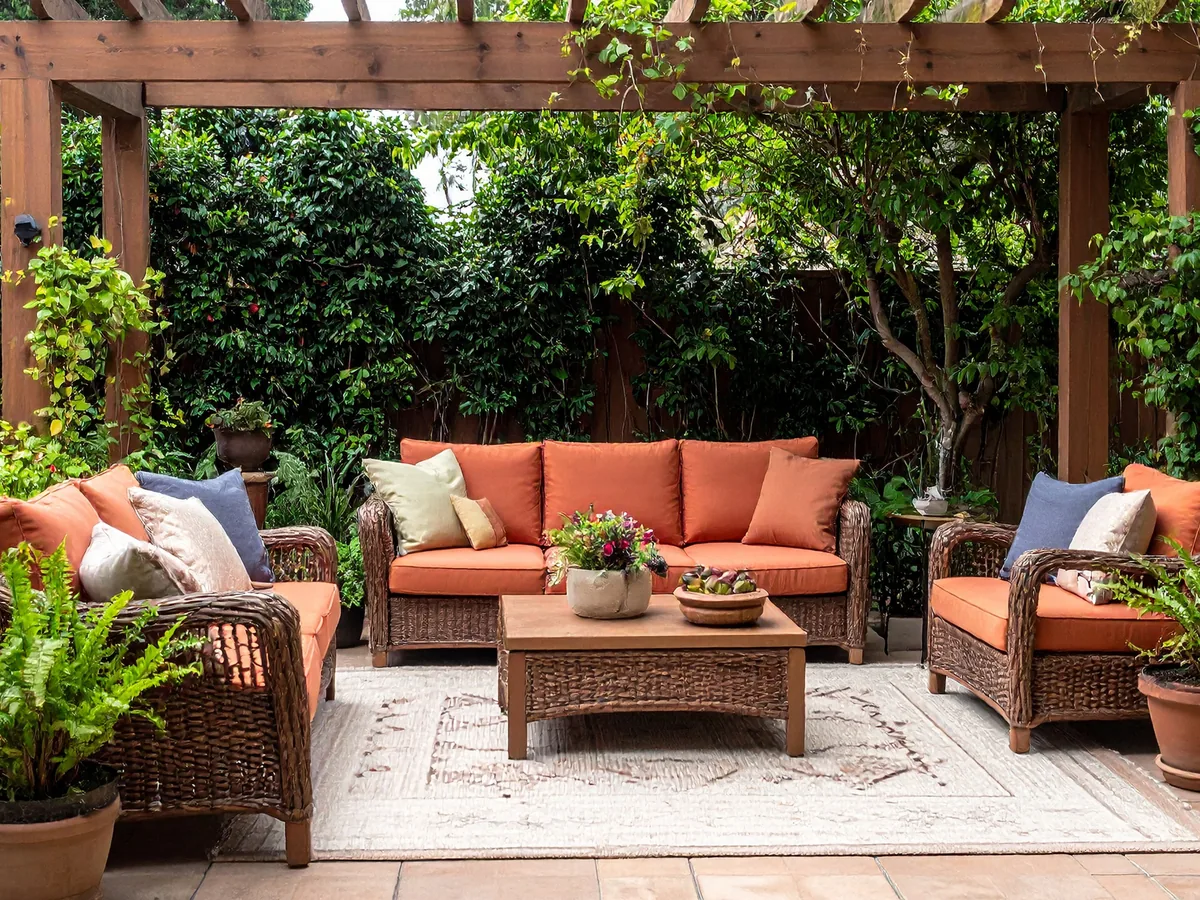
Outdoor space is worth more here than in most of the city
Lots here are generous, there is real open space around the edges, and the whole appeal of living out at this end of the Valley is having room. A patio is how that room becomes usable. It is also, honestly, the cheapest square footage you will ever add to a house, since you are not framing walls or pulling a roof permit.
The catch is the weather. Summer afternoons out here are brutal, so a patio that gets used is one that has shade, or that faces the right direction, or that sits high enough to catch the evening breeze coming off the hills. That is a design conversation, not a materials conversation, and it is one the contractor has on the first visit.
Clay is the reason patios move
The valley floor under the flat tracts is largely clay and clay loam. Water moves into clay slowly, and the heaviest clay swells as it takes it on. Then summer arrives, it dries out, and it shrinks. A patio laid straight onto that with a token layer of sand underneath will be uneven within a couple of seasons, and the low spot will be wherever water pools.
The fix is not exotic, it is just work nobody sees. Dig out the soft material. Where the plan asks for it, put a fabric between the clay and the aggregate so the two never blend. Bring the base up in compacted lifts. Set a steady fall away from the house so rain leaves instead of standing. Where there is nowhere for it to go, add a channel drain or a dry well. Do that and the patio stays flat. Skip it and no paver on the market saves you.
Three kinds of Woodland Hills patio
The flat backyard
Behind the post-war ranch homes north of the boulevard you usually get a level rectangle of lawn and a small original slab off the back door. Extending or replacing that is a typical job among the paver patios and pool decks laid across Woodland Hills. It is quick, the access is easy, and the money goes almost entirely into base and material rather than site work.
Walnut Acres and the big parcels
On the old orchard land, the constraint is not space, it is deciding where to stop. These properties often support several connected areas: a dining terrace off the kitchen, a fire pit circle further out, a path linking them, sometimes a surface near a barn or a horse setup. Because the parcels are one to two acres, a patio can be sited for the view or the shade rather than jammed against the back wall of the house. There is also plenty of room for equipment and material, which keeps the labor efficient.
The hillside terrace
South of Ventura Blvd, heading up toward Mulholland, backyards tilt. Building a usable patio there means creating a level bench: cut into the slope, retain the cut or the fill with a wall, drain behind the wall so hydrostatic pressure never builds, and build the paver base on top of properly compacted material. The result is often the best space on the property, with the whole Valley laid out below it. It is a bigger build than a flat-lot patio, grading in the hillside grading area needs a City of Los Angeles grading permit, and the quote will lay all of that out before anyone signs.
Sketch it out with a contractor.
Tell us the yard and roughly what you picture. The contractor walks it, talks through layout and shade, and puts a fixed price on paper.
Get a free quoteGet a price for your patio
Two fields is all we need. We call or text you back with a straight number, no card and no pressure.
Rather just talk? Call (818) 867-8109. Your details go to one licensed contractor. How we handle them
Pool decks and fire pits
Pavers are a strong pool deck. They stay cooler underfoot than a dark poured deck, the joints give some grip when wet, and the repair story is far better: if the deck settles near the shell, you lift the units, fix the base, and reset the same pavers. Nobody runs a jackhammer next to your pool. Around a fire feature, the noncombustible surface is the point. That matters everywhere, and it matters more on the properties south of the boulevard inside the City's Very High Fire Hazard Severity Zone, where a hard, nonflammable ring around the house is part of a defensible space plan rather than just a design choice.

Picking pavers for this climate
- Color temperature. Sand, buff, and light gray stay noticeably cooler than charcoal on a hot afternoon, and this is a place that has hit 121 degrees. If the patio gets afternoon sun with no cover, go lighter.
- Fade resistance. Concrete pavers are pigmented through the unit. Stamped concrete puts its color in a topcoat that the Santa Ana sun works on relentlessly. Over ten years the difference is obvious.
- Texture. Tumbled pavers read older and softer, and suit the ranch and Spanish-influenced houses common here. Smooth slab formats read modern and pair well with the newer builds up the hill.
- Format. Large-format slabs cover ground fast and look clean, but they demand a very flat base. Smaller units are more forgiving and better on anything with a curve.
- Permeable options. On the clay flats, a permeable paver with open joints can take roof and patio runoff down into a stone reservoir instead of shedding it toward a neighbor.
Keeping it looking new
A paver patio wants very little. Sweep it. Rinse it a few times a year. Top up the joint sand when you notice it dropping, usually every couple of years. Sealing is optional and mostly about color depth and stain resistance near a grill or a dining table. If a unit ever gets cracked or stained beyond saving, one paver comes out and a new one goes in, which is a twenty minute job rather than a resurfacing project.
A driveway on a hill street is a different build entirely. See driveways on Woodland Hills lots.
Patio and pool deck formats are shown in the styles gallery.
Related pages
What people ask about a patio
How much does a 20x20 paver patio cost in Woodland Hills?
A 20 by 20 patio is a common size. What it costs depends on the base your soil needs, the drainage, any old slab that comes out first, and the paver and pattern, and the contractor prices it in writing after seeing the yard. A simple square on a level backyard is the simplest version. Curves, a raised terrace, or a seat wall push it up.
Do I need a permit for a backyard paver patio in Woodland Hills?
LADBS says grading permits are required for any grading work in the hillside grading area, and LADBS lists retaining wall cuts and backfill among the work its grading permits cover. A ground-level patio on a flat lot is simpler. The contractor flags what your yard needs during the site visit rather than after work starts.
Will a paver patio get too hot to walk on here?
Any hard surface gets hot in a place that recorded 121 degrees at Pierce College in September 2020. Lighter and mid-tone pavers stay noticeably cooler than dark charcoal, and shade from a pergola or a mature tree makes a bigger difference than the material does. Pavers do release heat faster than a solid concrete slab once the sun moves off.
Can you build a patio on a sloped backyard?
Yes, and that is most of what a hillside job is. A sloped yard becomes a level terrace by cutting into the grade and holding the fill with a retaining wall, then draining behind that wall so water pressure never builds. It costs more than a flat-lot patio, and it is what turns an unusable slope into the best room in the house.
Can pavers go around a pool?
Pavers are one of the better pool deck surfaces. They stay cooler than dark concrete, they are not slick when wet, and if the deck ever settles near the shell you lift the affected units, correct the base, and reset them instead of jackhammering a slab next to your pool.